Advances in medieval economic theory had greater real-world consequences than many know. Among economists, Joseph Schumpeter’s economic history mostly starts economic theory with the Salamancans. Tyler Cowen in The Marginal Revolution states that the advances of the Salamanca school remained largely ignored, and the connection between economic theory and practice was non-existent until 1776, when Adam Smith made a treatment of economics so systematic that economics became a field in its own right. And even still, the key insights of demand, supply, and marginal slopes took a century more, until Walras and Jevons.
Yet within finance, academic theory had real-world consequences, starting of course with the theory of usury.
The moral theory of usury grew in import throughout the first seven centuries of Christianity, but it was a single moral theory, not an economic one. The idea was that interest on loans was a way to get money without work; it was not only a form of sloth, but also a pure transfer from the borrower to the lender. The practice was much maligned and often condemned by the Catholic Church. Perhaps in a Malthusian world this makes sense, but nonetheless loans were frequently necessary to overcome difficulties, and future flows of cash and crop are always tempting to mortgage. The Jewish ghettoed underclass met the demand of kings for cash now and charged interest. They were resented and abused, but useful.
Joel Kaye has shown that the thirteenth-century expansion of trade helped spur refinement of scholastic economic theory, especially for Franciscans, whose views and practices of poverty were contentious. Two very important theories of finance had been developed by the great Franciscan Peter John Olivi in the late thirteenth century: opportunity cost and risk. According to Olivi, it was because of opportunity cost and risk that merchants justly can make profits on arbitrage, seek modest returns on a loan, and charge a range of prices based on market conditions. It took the radical poverty of the Franciscans to see with fresh eyes the value to society provided by merchants and trade!
These theories provided groundwork for the idea that interest-bearing loans could be socially valuable rather than merely extractive. Another Franciscan, Bernardino da Feltre, took up the argument, extended it, and openly supported low-interest lending to the poor. He helped Pavia set up a Monte in the fifteenth century. The Monte was a collateralized loan service initially funded by donations. Poor and middle-class people could pawn an item in exchange for a loan. What made this controversial was that the one-year loan would bear interest between 2 and 15% per year to pay for the stewards of the fund. Were profits on a loan morally legitimate if they only paid for the management of the loan? In Leo X’s formulation the interest gained was given a list of legal uses, all of which were meant to indicate that loan services should have zero producer surplus. At first, only the expense of running the fund was an approved use of the interest, and any additional profits were to help the poor. However, the notion of just remuneration to the Monte expanded to include both opportunity cost and risk. And at the same time, in practice, the notion of “help the poor” expanded — as did who could deposit funds in the Monte.
While the Franciscans supported a limited form of lending at interest in charitable circumstances, the Dominicans took the other side of the debate. The Dominicans thought the loosening of the purse was also a loosening of morals. For how could a person charge interest in any circumstance without opening the door to justifying interest in many circumstances? It is not how the interest is used that makes it just or unjust. It is the act itself: as soon as you’ve charged interest, no matter how noble the cause the interest is put to, you’ve stolen from the laborer as an idle lender. The ongoing dispute was on the docket to be resolved at the Fifth Lateran Council.
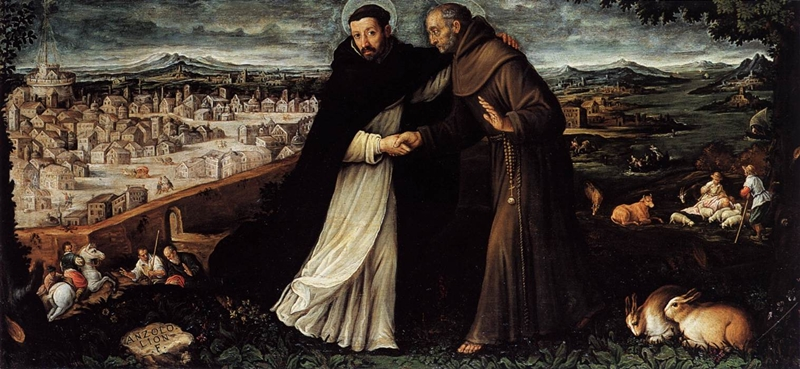
At that council in 1515 Franciscan financial reasoning won. The Monti di Pietà were sanctioned by Pope Leo X. The 1515 document Inter multiplices gave full license to the practice. He understood that the Monti, properly restricted, helped and did not harm, and the payment in interest was a just fee for the administration of the program.
“We commend the zeal for justice displayed by the former group, which desires to prevent the opening up of the chasm of usury, as well as the love of piety and truth shown by the latter group, which wishes to aid the poor, and indeed the earnestness of both sides. Since, therefore, this whole question appears to concern the peace and tranquility of the whole christian state, we declare and define, with the approval of the sacred council, that the above-mentioned credit organisations, established by states and hitherto approved and confirmed by the authority of the apostolic see, do not introduce any kind of evil or provide any incentive to sin if they receive, in addition to the capital, a moderate sum for their expenses and by way of compensation, provided it is intended exclusively to defray the expenses of those employed and of other things pertaining (as mentioned) to the upkeep of the organisations, and provided that no profit is made therefrom. They ought not, indeed, to be condemned in any way. Rather, such a type of lending is meritorious and should be praised and approved. It certainly should not be considered as usurious; it is lawful to preach the piety and mercy of such organisations to the people, including the indulgences granted for this purpose by the holy apostolic see; and in the future, with the approval of the apostolic see, other similar credit organisations can be established.”
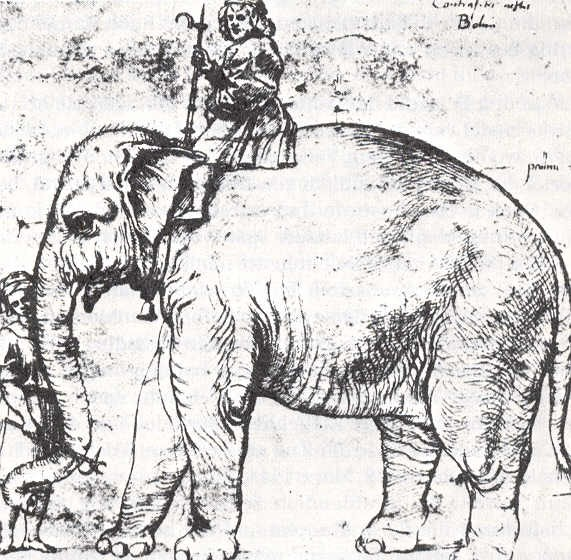
Pope Leo X was not a priest prior to his accession to the pontificate; indeed, he was a young Medici, appointed cardinal at age thirteen, studied theology and canon law, and officially donned the red cardinal cap at age sixteen. After 21 years of working the scene of Florentine and Roman patronage, art, and politics, he became Pope at age thirty-seven. His great love was for the refinements of the totally ravishing, wildly exciting, Greco-philic artistic and literary movement of the age. Of the frugal arts, restraint and thrift, he knew little. Yet he had taste and a talent for understanding the ways of the world and even its corruption. So while he plunged the Papal States into debt of Biblical proportions, he also funded every pious and studied thing a man could think of — from orphanages to obelisks, from Greek and Hebrew printing presses to Tuscan and Florentine comedians and handsome companions, from benefices for distant relatives, to Raphael’s renovations of Vatican rooms. And famously, he raised money — by selling indulgences — to build the mother of all churches, St. Peter’s Basilica.
And when you read the texts of the Fifth Lateran Council, it is also clear that Pope Leo X understood the role and purpose of the Church, the difference between good institutional structure and bad, and was well aware of the need for reining in oversight of the abuses among monks, priests, and clerics.
And so, this urbane friend of lavish spending saw the extension of finance as a help to the poor. He definitively sanctioned what had been permitted already. And thus, the Age of Exploration exploited out new geographies as well as new financial tools..
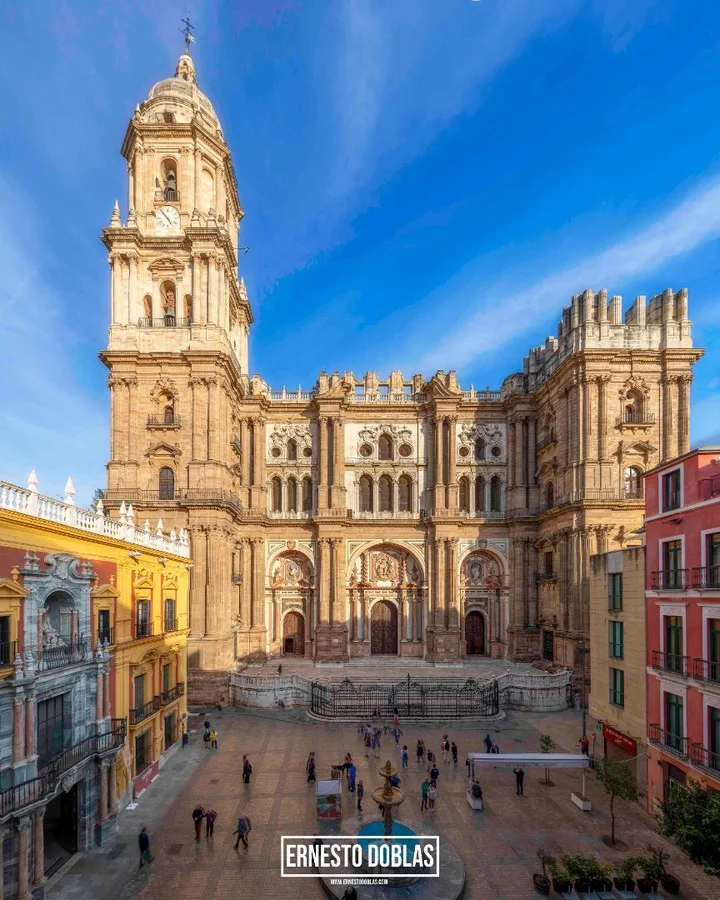
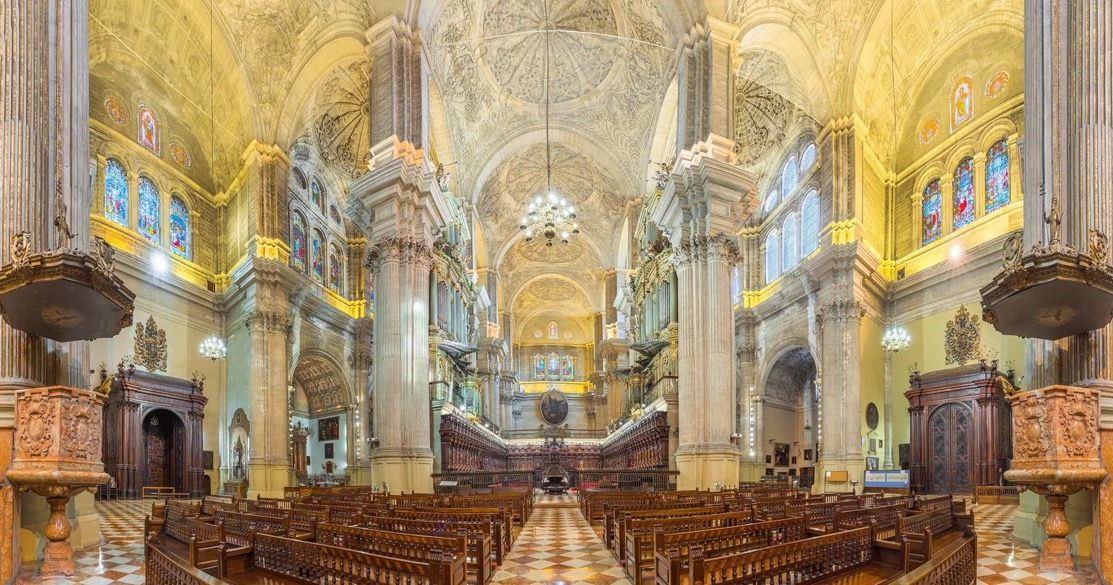
Imagine you are the Bishop of Málaga in 1612 preparing your will. Now Málaga is not exactly the wealth capital of the world; it’s a growing but not huge port. Yet you hope it is an up-and-coming city on the global stage as an export center for Spanish goods. Your cathedral should surely be worthy of the Spanish empire. Upon your death, your wealth should be managed in such a way as to provide beneficence to the entire city and make you one of its great patrons. The Renaissance may have started in Italy, but with Spanish colonies in the New World and a sharp rise in Spanish education, leadership, and patronage of the arts, why shouldn’t little post-Muslim Málaga be the grand Christian Málaga of the future? What financial engineering can achieve these goals?
So you the bishop can string together a few Renaissance financial vehicles. First you need an institution to hold the assets, and second you need investments. A Monte di Pietà (or in Spanish, a Monte de Piedad) can serve both these goals. In order to help the poor, the hungry, the poor and hungry students, the hospitals, the chaplains, the orphans, this Monte de Piedad can offer its loan-servicing arrangement. In order to hold the funds in perpetuity and be able to legally reinvest them, the Monte de Piedad can be a charitable trust, ensuring the benefits to society continue.
And since the Monte has a 5% return per year, the fruits can be used for even more “good works.” Why spend it all immediately when one could use those returns to purchase another financial vehicle?
The return on investment can be used to purchase a land-backed annuity called a censo or a claim on future taxes called a juro. Now surely these are usurious? Right? Like you are getting a return without work! And these aren’t even charitable, are they? And doesn’t this make the Monte manager an evil investment banker?
Well, no! Back in 1251 Pope Innocent IV sanctioned the sale of land in return for a lifetime annuity — provided there was real land underlying the sale. Sounds suspiciously like a mortgage. But the key is that an asset that yielded fruit yearly was matched with a liability paid out yearly.
But let’s say you owned many censo annuities. They provide cash yearly, but you want even more cash now, say to build a church. You have cash flow but not a lot on hand. Why not trade the future flow for cash now on discount? Trades like that were illegal. You weren’t allowed to issue a bond secured by annuities or secured by land. That would be too far removed from the underlying “real” asset. So it is usury, speculation, financialization, and worthy of several other slurs.
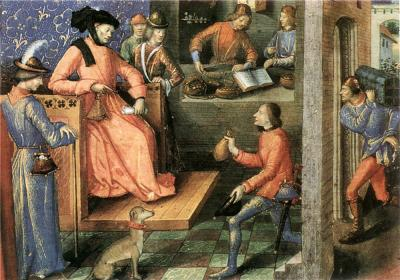
However, like many things in this life, when the government does it, it’s not illegal. The wealthy could purchase juros, legal claims on government revenue, and those juros would give the government instant funds in exchange for a cut of taxes in the future. In other words, government bonds were the only asset that worked like that.
So the bishop put together his financial plan with promises attached to support charitable needs through pious Monte di Pietà microlending. Thence he pledged the profits of the Monte to be used for several additional purposes: running the fund (of course), Masses offered for himself and his relatives, improving the Mass equipment, the sanctuary, and the sacristy of the cathedral, and funding an orphanage and scholarships at the local college.
The principal of the Monte di Pietà would go into juros and censos, and the interest earned by the juros, censos, and Monte di Pietà would be lent to the needy and go toward the above projects. It’s probably one of the earliest and most sophisticated non-profit financial plans in modern history. There’s diversification of assets and investments, a real portfolio approach to doing good — broadly conceived. There are two layers of interest-bearing vehicles and obviously big hopes of a perpetual machine for investing in these works.
Sadly, it seems something went wrong with the investment calculator.
The bishop had pre-committed at least 15,000 ducats of profits to higher-priority causes than the university. And while the bishop had promised 4,000 ducats to the university twenty years after 1612, the university rector sued for the money in 1632 and came away empty-handed. In 1670, there was still litigation by the university against the Monte de Piedad of Málaga, seeking the promised money for a theology chair and student scholarships.
At a 5% rate after twenty years, the 20,000-ducat principal should be up some 33,000 ducats, so those 33,000 ducats must have been used somewhere, right? That is largely incorrect. Only modern finance offers such liquidity of markets. Today nearly every dollar can be invested in a product of a similar risk profile. But in the seventeenth century, at any one time only a small fraction of the total principal of the Monte was lent to the needy. Thus the interest earned would be quite a bit smaller than the hypothetical maximum.
| The calculator’s world (what the will assumed) | ducats |
|---|---|
| Principal | 20,000 |
| Profit over 20 yrs @ 5%, fully invested, compounding | ~33,000 |
| Less: pious works (Masses, sacristy, orphanage, etc.) | −15,000 |
| Less: university (theology chair + scholarships) | −4,000 |
| Residual | +14,000 |
In theory, every promise can be covered with room to spare!
Oh, fortuna!
| The Monte’s world (what a pawnshop actually yields) | ducats |
|---|---|
| Principal | 20,000 |
| Fraction actually out on loan at any time (~25%, illustrative) | 5,000 |
| Annual yield on deployed capital @ 5% | ~250 |
| Returns spent as earned (no compounding) → 20-yr profit ≈ | ~5,000–9,000 |
| Less: pious works (first priority) | −15,000 (already underwater) |
Despite this shortfall, you know you’ve entered the modern world when you are running a diversified portfolio and financial speculation gets a bit ahead of you. Bishop Don Juan Alonso de Moscoso was such a modern man, using the financial freedom offered by the Catholic Church to run a diversified portfolio towards pious ends. As David Abulafia says, “The vision of Julius II and Leo X [of a renaissance made of art and pious religious orders] was realized in the late 16th thanks to Spanish silver” and – we might add – a financial sector directed towards ecclesiastical ends.
Bibliography
Abulafia, David. The Great Sea: A Human History of the Mediterranean. London: Allen Lane, 2011.
Beeri, Emmanuel. “Monti di Pietà.” In Encyclopaedia Judaica. Accessed via Miriam Bodian, “Money Lending” course materials, University of Texas at Austin. https://www.laits.utexas.edu/bodian/ml-motidipieta.html.
Cowen, Tyler. The Marginal Revolution: Rise and Decline, and the Pending AI Revolution. Arlington, VA: Mercatus Center at George Mason University, 2026. https://tylercowen.com/marginal-revolution-generative-book/.
Delcorno, Pietro. “Mobilizing Objects and Money: Inventories of the Donations at the Origin of the Monti di Pietà.” Journal of European Economic History 52, no. 2 (2023): 51–75.
Fifth Lateran Council. Inter multiplices (1515). In Decrees of the Ecumenical Councils, edited by Norman P. Tanner. Cited from “The Fifth Lateran Council (1512–1517),” Papal Encyclicals Online. https://www.papalencyclicals.net/councils/ecum18.htm.
Kaye, Joel. Economy and Nature in the Fourteenth Century: Money, Market Exchange, and the Emergence of Scientific Thought. Cambridge Studies in Medieval Life and Thought, 4th ser., 35. Cambridge: Cambridge University Press, 1998.
Mammadova, Sama. “Usury, Secularization, and the Monte de Piedad of Málaga, XV–XVII cc.” Ricerche Storiche (2025)
Schumpeter, Joseph A. History of Economic Analysis. Edited by Elizabeth Boody Schumpeter. New York: Oxford University Press, 1954.
 Sebastian Garren